Best Dash Cams for 2026 (The Cheapest Insurance in Your Car)
The dash cams worth buying in 2026, ranked by who they are for, from a compact 2K value pick to a 4G live-view cam. Real specs, honest tradeoffs, and the money case for why footage beats your word.
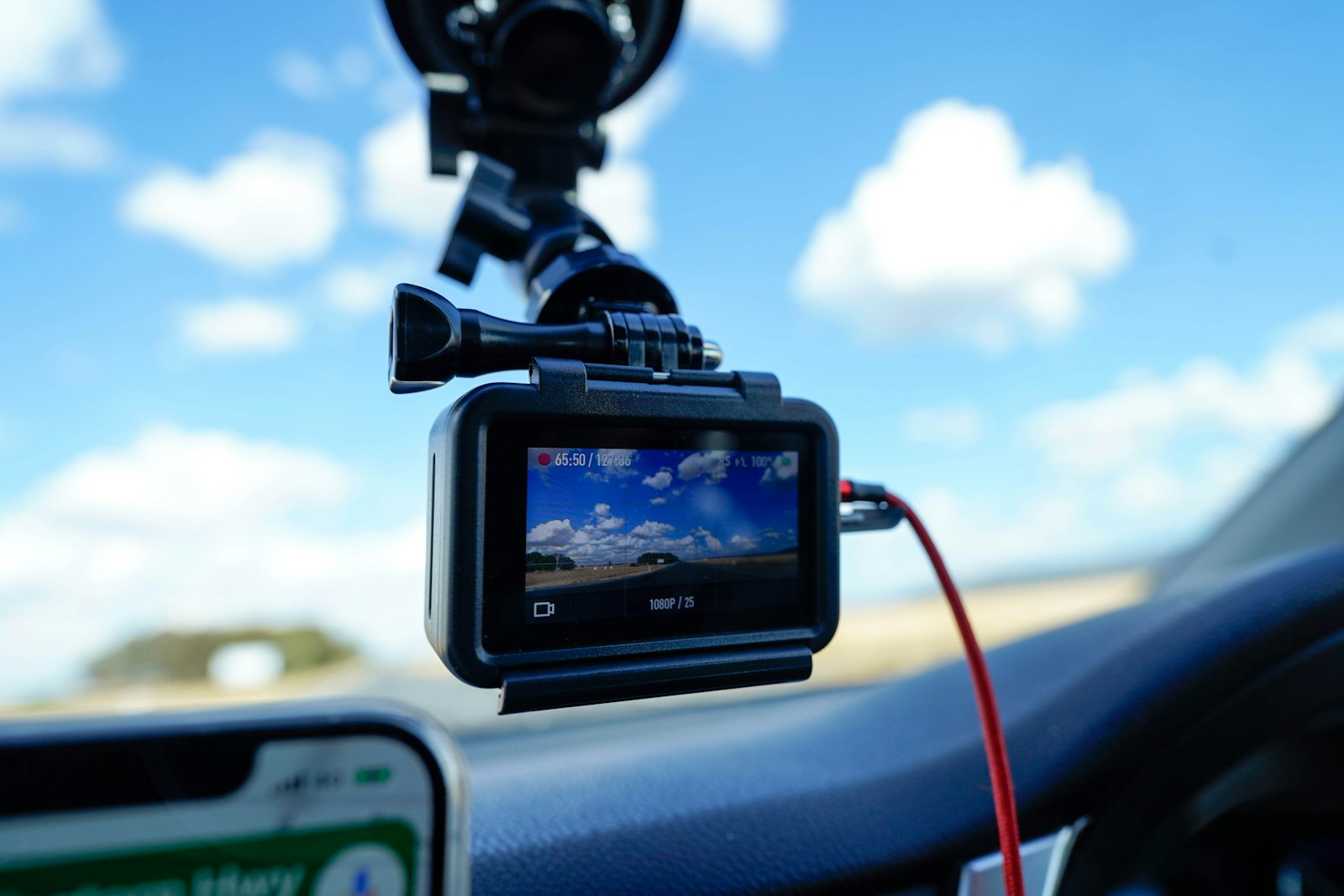
A stranger stomps their brakes in front of you, you tap their bumper, and suddenly it is your word against a car full of people who all swear you were flying. Without footage, you lose that argument and eat the at-fault mark. With a few seconds of video, the whole thing evaporates. That is the entire pitch for a dash cam, and it is why a good one is the best cheap insurance you can bolt to your windshield.
The timing helps too. School is back in, which means a fresh wave of brand-new teenage drivers and a lot of parents quietly wondering what happens in that car once it leaves the driveway. A dash cam answers both worries at once.
TL;DR: A solid dash cam costs about the same as one insurance deductible and earns it back the first time somebody lies about a crash. For most people, a front-and-rear kit that shoots sharp video day and night is the sweet spot. Want the smallest, most invisible option for a kid's first car? Go tiny and screen-free. Drive for Uber or Lyft? Get three channels so the cabin is covered. Want a live feed on your phone while the car sits in a lot? Pay up for a connected 4G model. Six picks below, sorted by who they are for.
A dash cam is the cheapest insurance you will ever buy
Here is the uncomfortable math. By the FBI's estimate, insurance fraud already adds somewhere between 100 and 300 dollars a year to the average premium, and staged-crash schemes are climbing, not fading. A camera does not stop a scammer from filing a false claim. It stops the claim from working. When the video shows the other driver brake-checking you on purpose, the case falls apart before it costs you a dime.
You do not have to be a fraud target for this to pay off, either. Most dash cam saves are boring: a he-said-she-said at a four-way stop, a hit-and-run in a parking lot, a branch that turns out to be nobody's fault. Footage turns all of those from a stressful argument into a thirty-second clip you email your adjuster, and most insurers will look at it. If you are still deciding whether you need one, we made the full case in do you actually need a dash cam. If your real worry is theft rather than crashes, that is a different tool, covered in best GPS trackers.
What actually matters when you pick one
Ignore the marketing and weigh four things. Resolution: 2K up front is the floor for reading a plate a few cars ahead, and 4K gives you room to zoom in at night. Coverage: rear-end hits are common and rarely your fault, but you still have to prove it, so front-and-rear is worth the small step up for most drivers. Just know a windshield cam is not the reversing camera in your bumper, which we cover in best backup cameras. Power: cheap cams use a lithium battery that hates heat, a real problem in a Florida summer, while better cams use a supercapacitor that shrugs it off. And storage: buy a high-endurance microSD card built for constant recording, because a regular one dies quietly and you only find out the day you needed the clip.
The best dash cams for 2026, ranked by who they are for
Best overall: Viofo A229 Pro
The Viofo A229 Pro is the one enthusiasts point newcomers to. The front camera shoots true 4K on a Sony STARVIS 2 sensor, the rear shoots 2K, both run HDR, and the night footage is clean enough to actually read plates. You get GPS, fast 5GHz WiFi, voice control, and a buffered 24/7 parking mode, plus the option to add a cabin channel later. Not budget money, but nothing to upgrade to.
Best compact value: Viofo A119 Mini 2
Want most of that quality for less? The Viofo A119 Mini 2 is the value champ. It is a single front camera, but it records a genuine 2K at 60 frames per second on a STARVIS 2 sensor in a body barely bigger than a car key. Supercapacitor, GPS, and 5GHz WiFi are all here. It is the set-it-and-forget-it cam, and you can pair a rear camera with it later.
Best for a teen's first car: Garmin Dash Cam Mini 3
The Garmin Dash Cam Mini 3 is roughly key-fob sized with no screen, which is the point for a young driver: nothing to poke at, it just runs. You get sharp 1080p, voice control, a built-in polarizer to cut glare, and automatic crash detection that saves the clip on its own. The honest catch is no GPS, so it stamps date and time but not speed. For a discreet camera a nervous new driver forgets is even there, that is a fair trade.
Best for rideshare and families: Vantrue N4 Pro
Drive for a living or hand the keys to a teen and you want the cabin on video too. The Vantrue N4 Pro, around 350 dollars, records three channels at once: 4K out front, 1080p of the cabin with infrared night vision, and 1080p out back. Add HDR, GPS, 5GHz WiFi, and 24/7 parking and you have the road, the passengers, and the traffic behind you. For an Uber driver settling a dispute, that interior channel is the whole ballgame.
Best connected cam for parents: Nextbase iQ
The Nextbase iQ is the closest thing to a security camera that follows your car. Thanks to a built-in 4G connection, you can pull up a live view from your phone, get an alert if the car is bumped while parked, and trigger an Emergency SOS after a serious crash. It comes as iQ 1K at 500 dollars, iQ 2K at 600, and iQ 4K at 700, and the smart features lean on a paid data plan. A splurge, but checking on the car from your couch is real peace of mind in a new-driver house.
Best budget front-and-rear: Redtiger F7N
The Redtiger F7N is the default budget-shelf pick, usually the cheapest way to get front and rear coverage with GPS, a screen, and quick WiFi. One honest caveat so you buy with clear eyes: its "4K" is upscaled from a 5-megapixel sensor, so it is really a crisp 2.5K, not native 4K. At this price that is a fair compromise, just do not expect it to match the A229 Pro on a dark plate.
Do not skip the install, or the SD card
Two things trip people up. If you want parking mode, you need a hardwire kit so the camera can draw from the car, ideally with a low-voltage cutoff so it stops before it drains your battery. A plain 12V plug is fine if you only record while driving. And buy that high-endurance microSD card up front. It is a cheap part people ignore until the footage they needed was never saved.
Bottom line
Most drivers should buy the Viofo A229 Pro and stop thinking about it, or drop to the A119 Mini 2 to spend less on a front-only setup. Put a Garmin Mini 3 in a teenager's car. Get the Vantrue N4 Pro for rideshare or the cabin view. Splurge on the Nextbase iQ if live view sold you. Grab the Redtiger F7N if the budget is tight. The worst dash cam is the one you did not have on the day you needed it. And if the real question is whether the car is worth keeping at all, run the numbers with our free Sell or Keep tool.
FAQ
Do dash cams actually lower your car insurance? Sometimes, but rarely by much on their own. A handful of insurers offer a small discount, but the real savings come from winning disputed claims and dodging an at-fault premium hike, which costs far more than the camera. Ask your insurer about a discount, then buy one regardless.
Will a dash cam drain my car battery? Only if it is hardwired for parking mode and left running for days, and even then a good setup protects you. Supercapacitor cameras handle heat better than battery-based ones, and any proper hardwire kit includes a low-voltage cutoff that shuts down before your battery gets too low to start. For normal driving on a 12V plug, there is nothing to worry about.
Should I get a front-only or a front-and-rear dash cam? Front-and-rear for most people. Rear-end collisions are common and almost never your fault, but you still have to prove it, and a rear camera does that automatically. Front-only is fine if the budget is tight or you mostly want to document the road ahead.
Is it legal to record inside my car with a dash cam? Mounting rules vary by state, mostly about where on the windshield the camera can sit, so check your local law. Audio is a separate question, since some states require everyone to consent to being recorded, so if you run an interior camera for rideshare, just tell your riders it is on.
The Best Windshield De-Icer for 2026 (The $6 Spray That Beats Ten Cold Minutes and a Cracked Windshield)
A can of de-icer clears a frozen windshield in under a minute, and it costs less than a coffee. Here are the sprays and fluids worth keeping in your trunk, the AAA-backed DIY mix that costs pennies, and the hot-water mistake that can turn a frosty morning into a $400 glass bill.
Best Snow Socks for Tires (2026): The Textile Chain Alternative That Fits Your Car
Snow socks slip on in three minutes, cost less than a tank of gas, and get a low-clearance car moving in snow when chains will not fit. Here is which ones to buy, which car each suits, and when to skip socks for chains or winter tires instead.
The Best Remote Car Starters for 2026 (Skip the Dealer's $500 Warm-Up)
Aftermarket remote start done right in 2026, from a DIY kit that runs off your own key fob to a pro-installed system with a lifetime warranty, plus how to dodge the dealer markup.